7 Web Design Tips for Healthcare and Medical Websites
In today’s digital age, patients are no longer finding healthcare providers through phone books or referrals alone. They’re searching online, comparing medical websites, and judging credibility within seconds. That’s why web design for healthcare and medical websites has become more important than ever.
A well-designed healthcare website does more than look professional, it builds trust, improves patient engagement, and strengthens your clinic’s reputation. For healthcare providers, the design must not only look great but also comply with regulations, ensure accessibility, and guide visitors toward scheduling appointments or learning about services.
At May Medical Solutions, we understand that healthcare web design combines aesthetics, usability, and compliance. Below, we’ll explore seven essential web design tips for healthcare and medical websites that can help you create a trusted, patient-focused online presence in 2025 and beyond.
1. Prioritize User-Friendly Navigation
When patients visit your website, they’re often looking for specific information, your services, contact details, insurance acceptance, or appointment scheduling. If they can’t find it quickly, they’ll leave. Clear, intuitive navigation ensures visitors can reach the right information in just a few clicks.
Keep your main menu simple and organized by categories like Home, About Us, Services, Insurance, Resources, and Contact. Each section should have submenus for specialized content, such as Behavioral Health or Medical Billing.
It’s also wise to include a visible call-to-action button like “Book Appointment” or “Contact Us” on every page header. A sticky navigation bar that stays visible as users scroll helps maintain accessibility across devices.
Good navigation isn’t just about usability, it impacts SEO. Search engines use your site structure to understand your content hierarchy, helping rank your pages higher for relevant healthcare queries.
2. Optimize for Mobile Users
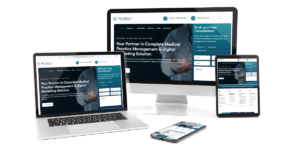
More than 70% of healthcare searches happen on mobile devices. If your website isn’t mobile-friendly, you’re instantly losing potential patients. A responsive design ensures your website adapts automatically to screens of all sizes, desktops, tablets, and smartphones.
Mobile optimization isn’t just resizing text; it involves fast-loading pages, easily clickable buttons, readable fonts, and simplified forms for appointment requests.
A mobile-first strategy is especially critical for healthcare practices where patients may search doctors near me or urgent care nearby. If your site loads slowly or elements overlap on smaller screens, visitors will move on to competitors.
At May Medical Solutions, we’ve seen how mobile optimization dramatically improves conversion rates for clinics and medical groups. A responsive, patient-friendly mobile layout keeps visitors engaged and encourages them to contact your practice.
3. Highlight Trust and Credibility
Healthcare is all about trust. A patient’s decision to contact a provider depends on how credible the website appears. Your web design should reflect professionalism, reliability, and care.
Use high-quality photos of your facility, doctors, and staff rather than stock images whenever possible. Include credentials, certifications, patient testimonials, and professional affiliations prominently on your homepage or “About Us” page.
Displaying security badges (like SSL certificates) and HIPAA compliance notices can further reassure users that their data and health information are protected.
Design also plays a psychological role, colors like blue and white often convey trust, cleanliness, and calmness. Meanwhile, consistent branding elements like fonts and logos reinforce your medical identity across all pages.
A well-structured, authentic, and visually cohesive design communicates expertise before a single word is read
4. Ensure HIPAA Compliance and Security
Healthcare websites handle sensitive information, making security a top priority. If your website includes online forms, patient portals, or telehealth integrations, it must comply with HIPAA regulations.
That means using secure hosting, HTTPS encryption, and proper data-handling practices. Contact forms should clearly state privacy policies, and no personal health information should be transmitted without secure protocols.
Medical practices should also perform regular security audits to ensure ongoing protection. In addition, implementing two-factor authentication, secure login systems, and encrypted backups safeguards both patients and your business reputation.
Designers and developers working in healthcare must always balance creativity with compliance. At May Medical Solutions, our team understands these critical standards and builds web experiences that meet both aesthetic and regulatory expectations.
5. Use Engaging, Patient-Centered Content
Great design attracts attention, but engaging content keeps it. A successful healthcare website blends visuals with educational and empathetic copy that speaks directly to patients’ needs.
Include clear service descriptions that explain treatments or procedures in simple, non-technical language. Add FAQs, blog posts, and health resources that empower patients with knowledge, not overwhelm them.
Content structure also matters. Use clear headings, short paragraphs, and bullet points for easy scanning. Many patients read quickly to find answers, so your layout should support readability.
Adding a blog section is a powerful SEO strategy. Regularly updated, keyword-rich articles about health topics, wellness advice, or practice updates can help improve organic visibility.
Every piece of content should guide patients toward taking the next step, whether booking an appointment or calling your clinic. The tone should always be compassionate, professional, and educational.
6. Focus on Speed and Performance
A slow-loading website frustrates users and hurts your Google rankings. Studies show that if a page takes longer than three seconds to load, more than half of users will leave.
Optimizing speed starts with choosing reliable hosting, compressing images, minimizing plugins, and leveraging browser caching. Clean, lightweight code ensures your website runs smoothly even under high traffic.
For healthcare providers, performance issues can cost potential patients who need immediate information. A fast website creates a seamless user experience, encouraging engagement and trust.
Tools like Google PageSpeed Insights or GTmetrix can help you monitor and improve your performance metrics. Remember, speed is not just a technical factor; it’s a key part of patient experience and search ranking success.
7. Incorporate Accessibility and Modern Design Trends
Healthcare websites must be inclusive. Accessibility isn’t optional, it’s essential to ensure patients of all abilities can use your website effectively. Follow WCAG (Web Content Accessibility Guidelines) to make your site accessible to everyone.
That includes features like readable contrast ratios, descriptive alt text for images, keyboard navigation, and captions for videos. Screen reader compatibility is also crucial for visually impaired users.
Alongside accessibility, keeping up with modern design trends ensures your site feels current and trustworthy. In 2025, clean layouts, soft gradients, motion graphics, and minimalistic typography are popular. However, avoid clutter, simplicity often conveys professionalism better than flashy effects.
A modern, accessible design helps you stand out while reflecting care and inclusivity, values that resonate deeply in healthcare.
Why Web Design Matters for Healthcare Success
A healthcare website isn’t just an online brochure, it’s the front door to your practice. Patients form their first impressions within seconds, and your design determines whether they stay or move on.
Every design choice, from navigation and color palette to loading speed and tone of content, contributes to how users perceive your care quality.
A well-optimized healthcare website can:
- Improve patient acquisition and retention.
- Strengthen local SEO rankings.
- Enhance your brand’s credibility.
- Increase appointment bookings and inquiries.
- Build long-term trust in your medical practice.
May Medical Solutions specializes in web design for healthcare and medical websites, helping clinics, hospitals, and providers build online experiences that attract, inform, and convert.
By implementing the strategies outlined here, you can ensure your website becomes a valuable digital asset that supports both patient care and business growth.
Conclusion
In 2025, healthcare web design is about more than just looking good, it’s about creating meaningful digital experiences for patients.
By following these 7 web design tips for healthcare and medical websites, you can build an online presence that stands out, earns trust, and drives measurable results.
A patient-friendly, secure, and visually engaging website is no longer optional, it’s essential for success in the modern healthcare landscape.
If you’re ready to take your practice’s digital presence to the next level, May Medical Solutions is here to help you design a website that reflects your professionalism, compassion, and expertise.