Missed appointments are one of the most common operational challenges faced by healthcare providers. When patients fail to attend scheduled visits without notifying the practice, valuable time is lost, schedules become disrupted, and healthcare professionals may struggle to maintain consistent patient care. Over time, these missed visits can affect revenue, staff productivity, patient satisfaction, and the overall efficiency of a medical practice.
Finding practical ways to Reduce No-Show Appointments is not simply about reminding patients to attend. It requires understanding why appointments are missed, improving communication, making scheduling more accessible, and creating a patient-centered administrative process. A well-organized appointment system helps patients stay engaged with their healthcare while allowing providers to manage their daily schedules more effectively.
For healthcare administrators, reducing missed visits should be considered an ongoing operational priority. Small improvements in scheduling, patient communication, and front-office workflows can make a meaningful difference in how a practice operates.
Why No-Show Appointments Are a Serious Problem for Medical Practices
Every scheduled appointment represents an opportunity to provide care, address patient concerns, review progress, and maintain continuity. When a patient does not arrive, the provider may be left with unused clinical time that cannot always be recovered.
The financial impact is particularly noticeable in practices operating with limited appointment availability. Physicians, nurses, therapists, administrative staff, and billing teams still have operational expenses regardless of whether a patient attends the scheduled visit.
Beyond revenue loss, missed appointments can interfere with treatment plans. Patients who repeatedly miss follow-ups may experience delays in diagnosis, medication adjustments, preventive care, or recovery monitoring. This can create additional administrative work and make it more difficult for healthcare providers to deliver consistent care.
A proactive strategy to Reduce No-Show Appointments helps medical practices protect their schedules while supporting better patient engagement and more reliable healthcare delivery.
Understanding Why Patients Miss Medical Appointments
Before introducing new policies or technology, medical practices need to understand the underlying reasons behind missed visits. A no-show is not always the result of carelessness or a lack of interest in treatment. Patients may face circumstances that make attending an appointment difficult.
Transportation and Accessibility Challenges
Transportation remains a significant barrier to healthcare access. Patients may have limited access to public transportation, unreliable vehicles, mobility challenges, or difficulty arranging transportation during working hours. These barriers can become more complicated for patients living in rural areas or those traveling long distances for specialized care.
Medical practices should consider accessibility when reviewing appointment attendance patterns. Understanding these challenges can help administrators make scheduling more flexible and explore options that better accommodate patients.
Scheduling Conflicts and Busy Lifestyles
Patients frequently balance work responsibilities, childcare, family commitments, and personal obligations. An appointment scheduled several weeks in advance may no longer fit their circumstances when the date arrives.
When patients have limited flexibility, even minor scheduling conflicts can lead to missed visits. A practice with inconvenient appointment times or limited rescheduling options may unintentionally increase its no-show rate.
Forgetfulness and Poor Appointment Communication
Patients can forget appointments, particularly when they receive confirmation only at the time of booking. Long waiting periods between scheduling and the actual appointment increase the likelihood of missed visits.
Clear communication, timely reminders, and convenient confirmation options can help Reduce No-Show Appointments by keeping upcoming visits visible and making it easier for patients to remember their commitments.
Financial Concerns and Insurance Confusion
Some patients postpone or miss appointments because they are uncertain about copayments, deductibles, insurance coverage, or other financial responsibilities. Uncertainty about costs may discourage patients from attending, especially when they have already experienced financial pressure.
Providing transparent information about billing, insurance verification, and expected patient responsibilities can reduce confusion and support more confident appointment attendance.
Improve Appointment Reminder Systems
Appointment reminders are among the most practical tools for addressing missed visits. However, the effectiveness of a reminder system depends on its timing, delivery method, clarity, and ease of response.
A reminder should do more than notify a patient of an appointment. It should help the patient confirm attendance, identify scheduling conflicts, and communicate with the practice before the appointment date.
Use Automated SMS Reminders
Text messaging provides a convenient way to communicate with patients because most people regularly check their mobile phones. Automated SMS systems can send appointment notifications without requiring front-desk staff to contact every patient manually.
A structured reminder schedule can include an initial notification several days before the appointment and a follow-up closer to the scheduled visit. This approach provides patients with enough time to prepare, confirm attendance, or request a change.
When practices use automated reminders to Reduce No-Show Appointments, they should ensure messages are accurate, easy to understand, and sent through systems that respect patient privacy and applicable communication requirements.
Send Email Appointment Notifications
Email reminders can complement SMS communication by providing patients with more detailed appointment information. Emails can include appointment dates, clinic contact details, scheduling instructions, and relevant administrative information.
Although email may not be as immediate as text messaging, it can still serve as an important communication channel, particularly for patients who prefer digital correspondence.
A medical practice should avoid relying on a single communication method when patient preferences and accessibility needs vary.
Make Reminders Easy to Respond To
The value of a reminder increases when patients can take action immediately. Confirmation and cancellation options reduce unnecessary communication delays and give the front desk better visibility into the upcoming schedule.
When patients can easily notify the practice that they cannot attend, staff have more time to offer the appointment to someone else. A reminder system that encourages two-way communication is more useful than one that simply sends notifications without collecting responses.
Make Scheduling More Flexible and Patient-Friendly
Appointment scheduling directly influences whether patients can attend. A system that accommodates different work schedules, personal responsibilities, and healthcare needs can improve attendance and reduce administrative friction.
Offer Multiple Appointment Time Options
Medical practices should evaluate whether their appointment availability matches the needs of their patient population. Limited hours may create difficulties for patients who cannot leave work during the day or arrange childcare around standard clinic schedules.
Where operationally feasible, offering early appointments, later time slots, or selected extended hours can improve accessibility. Even modest scheduling adjustments may help patients find appointments that fit their daily routines.
Simplify Appointment Rescheduling
Patients sometimes miss appointments because they do not know how to change them or believe rescheduling will be complicated. A difficult cancellation process may encourage patients to disengage instead of notifying the practice.
An efficient rescheduling workflow should make it easy to contact the office, request a different time, and receive confirmation of the new appointment. Online scheduling tools can further reduce the effort required from both patients and administrative staff.
A simpler scheduling experience can help Reduce No-Show Appointments by allowing patients to communicate changes before the appointment becomes a missed visit.
Consider Telehealth Where Appropriate
Telehealth can improve access for patients who face transportation barriers, mobility limitations, scheduling difficulties, or geographic distance. When clinically appropriate and supported by applicable regulations, virtual visits provide an additional option for maintaining continuity of care.
Offering telehealth does not mean every appointment should become virtual. Providers must determine whether the service is suitable for the patient’s clinical needs, privacy considerations, and treatment requirements.
However, having more than one appropriate care-delivery option can make it easier for patients to remain engaged with their treatment plans.
Develop a Consistent Appointment Confirmation Process
Appointment confirmation should be a defined part of the practice’s administrative workflow rather than an occasional task performed when staff have extra time.
A consistent process allows front-office employees to identify patients who have not responded to reminders and prioritize follow-up communication when necessary. It also creates a more predictable scheduling environment.
Identify Unconfirmed Appointments
Practices should regularly review upcoming appointments and identify patients who have not confirmed their attendance. This process helps staff recognize potential scheduling problems before the appointment date.
An organized confirmation workflow also makes it easier to distinguish between patients who have acknowledged their visits and those who may need additional communication.
Follow Up With Patients When Necessary
For appointments that require additional attention, direct communication may be more effective than automated messages. Staff can contact patients to verify their availability, discuss scheduling concerns, or assist with rescheduling.
Personal communication can also help patients feel supported rather than pressured. The objective is to make attending care easier, not to create an uncomfortable interaction.
Maintain Accurate Patient Contact Information
Reminder systems cannot work effectively when patient phone numbers or email addresses are outdated. Medical practices should verify contact information during registration, check it during visits, and update records whenever patients report changes.
Accurate contact information improves appointment communication, reduces unnecessary administrative effort, and supports the reliability of the practice’s scheduling system.
Establish a Clear and Fair No-Show Policy
A clearly communicated no-show policy helps patients understand appointment expectations while giving administrative staff a consistent framework for managing missed visits.
The policy should explain cancellation procedures, advance notice requirements where applicable, rescheduling options, and any fees associated with repeated missed appointments. It should also describe how patients can communicate unexpected circumstances.
Communicate Policies Before the Appointment
Patients should receive information about the practice’s appointment policies during registration and scheduling. Providing these details in accessible language helps patients understand their responsibilities before a missed appointment occurs.
Policies should be easy to locate and consistently communicated through appropriate channels. Healthcare practices should also ensure that their policies comply with applicable laws, payer requirements, and professional standards.
Avoid Excessively Punitive Approaches
A strict policy may appear to be an effective way to improve attendance, but overly punitive measures can discourage patients from seeking care. Patients dealing with financial difficulties, health complications, transportation issues, or other barriers may already be struggling to access healthcare.
A balanced policy should encourage accountability while recognizing that patients may experience legitimate difficulties. The most effective administrative approach combines clear expectations with reasonable flexibility.
Use Scheduling Software to Improve Appointment Management
Modern scheduling technology can help medical practices manage appointments more efficiently, improve visibility, and reduce manual administrative tasks.
The right system should support the practice’s operational requirements while making the scheduling experience straightforward for patients and staff.
Automate Appointment Scheduling and Notifications
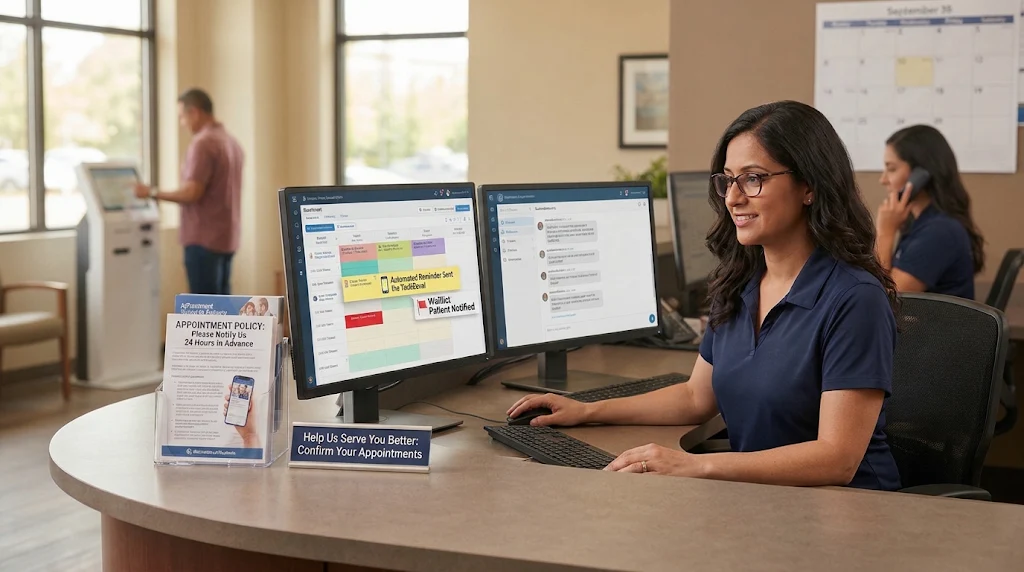
Scheduling software can manage appointment bookings, confirmations, reminders, cancellations, and rescheduling requests. Automation reduces repetitive work for front-office staff and helps ensure that patients receive consistent communication.
When integrated appropriately with practice management workflows, scheduling automation can support efforts to Reduce No-Show Appointments while giving administrative teams more time to focus on patient needs.
Maintain a Centralized Appointment Calendar
A centralized calendar provides staff with a clear view of provider availability, scheduled visits, cancellations, and open appointment slots.
This visibility makes it easier to manage daily schedules, identify gaps, and coordinate appointments across multiple providers or locations. It also reduces the risk of scheduling errors caused by disconnected systems or manual recordkeeping.
Integrate Scheduling With Practice Management
Scheduling tools are most effective when they work alongside other administrative systems. Integration with patient registration, insurance verification, billing workflows, and electronic health records can reduce unnecessary data entry and improve operational consistency.
An integrated workflow helps staff access relevant patient information without repeatedly switching between disconnected platforms.
Create an Effective Appointment Waitlist
Last-minute cancellations do not always have to result in lost appointment capacity. A well-maintained waitlist gives medical practices an opportunity to fill newly available slots with patients who are waiting for care.
Patients who prefer earlier appointments can be added to a waitlist with their availability and scheduling preferences recorded appropriately. When a cancellation occurs, staff can contact suitable patients and offer the available appointment.
A structured waitlist can improve schedule utilization, reduce idle provider time, and support patients who may otherwise have to wait longer for care.
This approach also complements reminder systems. If patients cancel early because of timely reminders, the practice has a better chance of filling the released slot before the appointment date.
Monitor No-Show Rates and Identify Patterns
Reducing missed appointments requires more than implementing administrative changes. Medical practices should regularly measure attendance performance and evaluate whether their strategies are producing meaningful improvements.
Track Appointment Attendance Metrics
Practice administrators should monitor no-show rates, cancellation frequency, appointment confirmation rates, and the number of slots successfully refilled after cancellations.
These metrics provide a clearer understanding of scheduling performance and help administrators assess the effectiveness of different operational improvements.
Tracking attendance over time can also reveal whether changes in reminder timing, scheduling availability, or confirmation procedures are helping the practice maintain a more predictable schedule.
Identify Patterns Across Appointment Types
Not all appointments experience the same attendance challenges. Missed visits may vary by provider, appointment type, time of day, lead time between scheduling and the visit, or other operational factors.
Reviewing these patterns helps practices avoid applying the same solution to every scheduling problem. A targeted approach allows administrators to focus on the areas where improvements are most likely to have an impact.
Use Data to Improve Administrative Decisions
Reliable scheduling data supports better operational planning. When a practice understands how patients respond to reminders, which appointment times experience more cancellations, and how quickly open slots are filled, it can make more informed decisions.
Data-driven scheduling is an important part of efforts to Reduce No-Show Appointments, because it allows administrators to evaluate outcomes rather than relying on assumptions.
Train Front-Office Staff in Patient Communication
Front-office staff play an essential role in appointment management. Their interactions with patients can influence whether scheduling concerns are resolved quickly or become barriers to attendance.
Staff training should focus on clear communication, efficient scheduling procedures, accurate recordkeeping, and respectful handling of cancellations and rescheduling requests.
Employees should understand how to use scheduling systems, follow reminder protocols, update patient information, and respond to patients who have questions about appointments.
A well-trained administrative team can help identify recurring scheduling problems and communicate those concerns to practice leadership. This makes appointment management a shared operational responsibility rather than an isolated front-desk task.
How Medical Billing and Administrative Support Can Improve Appointment Efficiency
Appointment management is closely connected to the broader administrative operations of a healthcare practice. Billing questions, insurance verification delays, incomplete registration, and unclear patient responsibilities can create confusion that affects the overall patient experience.
Efficient administrative workflows help patients understand what is required before their visits and reduce unnecessary delays during check-in.
Medical billing and practice management support can contribute to better coordination by maintaining accurate records, improving insurance-related communication, supporting patient registration, and organizing administrative processes.
When these workflows operate smoothly, healthcare providers can spend less time addressing preventable administrative issues and more time delivering patient care.
At May Medical Solutions, operational support services can help practices strengthen administrative processes, improve billing workflows, and support more organized practice management. A well-coordinated administrative environment can make appointment management easier for both patients and healthcare teams.
Build a Long-Term Strategy to Reduce Missed Appointments
No single intervention will eliminate missed visits entirely. Patients will continue to experience unexpected circumstances, changing schedules, transportation challenges, and other barriers that affect attendance.
The goal is to create a system that minimizes preventable missed appointments while remaining responsive to patient needs.
Medical practices that consistently review their scheduling processes, maintain accurate patient information, use effective reminders, offer convenient rescheduling options, and monitor attendance data are better positioned to manage appointment capacity.
Efforts to Reduce No-Show Appointments should be viewed as part of a broader commitment to patient access, administrative efficiency, and quality healthcare delivery. When scheduling systems are organized around clear communication and practical accessibility, both patients and providers benefit.
A reliable appointment workflow supports a healthier practice operation. It helps clinicians maintain productive schedules, enables administrative teams to work more efficiently, and encourages patients to remain connected to their care.
Ultimately, improving appointment attendance is not just about filling empty slots. It is about building a healthcare experience in which patients can access care more easily, practices can operate more consistently, and every scheduled visit has a better opportunity to make a meaningful difference.
Frequently Asked Questions (FAQs)
1. Why do patients miss medical appointments?
Patients may miss appointments due to forgetfulness, transportation problems, work commitments, financial concerns, scheduling conflicts, or difficulty communicating with the healthcare provider. Understanding these barriers helps practices improve attendance and patient engagement.
2. How can medical practices reduce no-show appointments?
Medical practices can reduce missed appointments by using automated SMS and email reminders, offering flexible scheduling, simplifying cancellations, providing appointment confirmations, maintaining accurate patient contact information, and following up with patients who have not confirmed.
3. Do automated appointment reminders help reduce no-shows?
Yes. Automated appointment reminders help patients remember upcoming visits, confirm their attendance, and reschedule when necessary. Consistent reminders through text messages or emails can improve communication and help practices manage their appointment schedules more efficiently.
4. How does scheduling software help prevent missed appointments?
Scheduling software automates reminders, appointment confirmations, cancellations, and rescheduling. It also helps staff monitor provider availability, manage waitlists, identify open slots, and maintain an organized appointment calendar, reducing administrative workload.
5. How do missed appointments affect medical practice revenue?
Missed appointments can result in lost revenue, unused provider time, increased administrative expenses, disrupted patient care, and reduced scheduling efficiency. Consistently managing appointment attendance helps practices improve resource utilization and maintain a more predictable revenue cycle.